




What Is a Heart Hospital?
A heart hospital is a healthcare facility that provides diagnosis, treatment, emergency care and follow-up services for cardiovascular conditions such as coronary artery disease, heart attack, heart failure, rhythm disorders and valve disease.
A heart hospital may provide outpatient cardiology consultations, diagnostic tests, cardiac medicines, interventional procedures, cardiac intensive care and cardiac surgery. The exact services vary from hospital to hospital.
Common services at a heart hospital
Cardiologist consultation.
ECG and cardiac monitoring.
Echocardiography.
Treadmill or stress testing where appropriate.
Coronary angiography.
Angioplasty and stent procedures.
Heart attack management.
Heart failure treatment.
Arrhythmia evaluation.
Cardiac ICU care.
Cardiac surgery or referral when required.
Preventive heart health counselling.
Quick recap
A heart hospital provides specialised cardiovascular care.
Cardiology services can range from routine consultation to emergency intervention.
Patients should confirm the exact services available at each hospital.
Why Choosing the Right Cardiac Hospital Matters
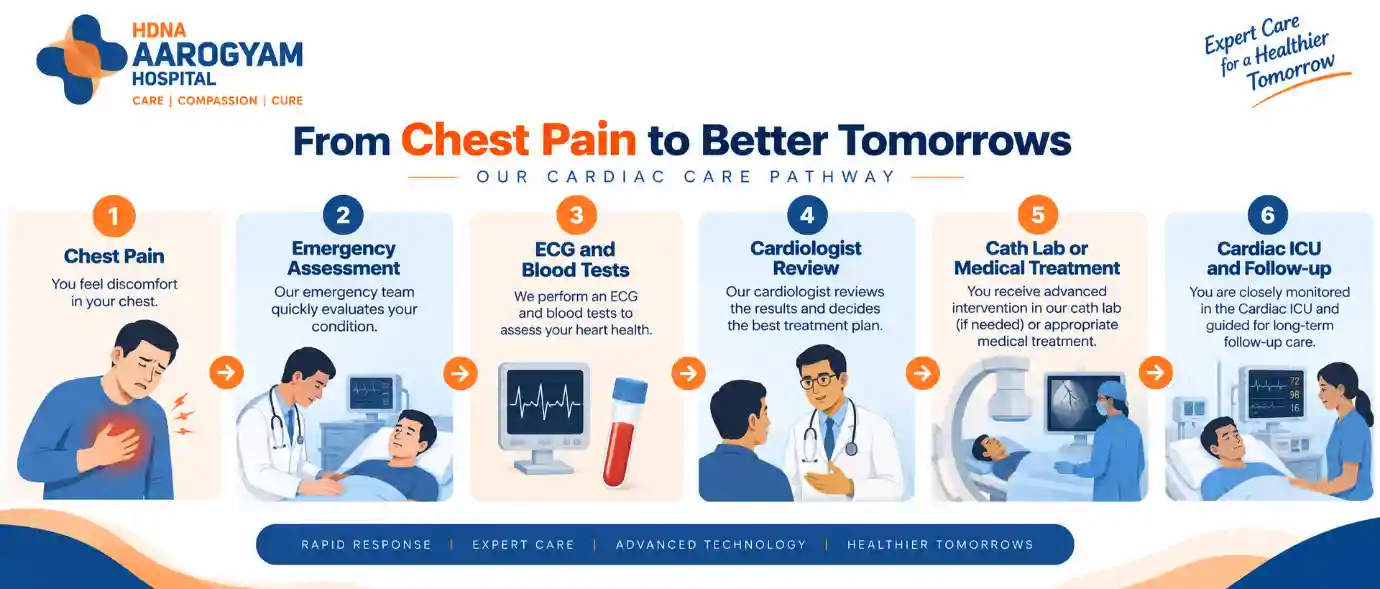
Heart conditions can change quickly, and some emergencies require immediate diagnosis and treatment.
The American Heart Association explains that heart attack symptoms may include chest discomfort, shortness of breath, sweating, nausea, light-headedness and discomfort in the arms, back, neck, jaw or stomach. (American Heart Association)
A heart attack occurs when blood flow to part of the heart muscle becomes blocked, usually because of a clot forming in a coronary artery. The WHO emphasizes that time lost is heart muscle lost, making early recognition and rapid treatment essential. (World Health Organization )
Why hospital selection should happen before an emergency
Families often search for a heart hospital only after a serious symptom appears. A better approach is to identify a trusted cardiac facility in advance, especially when a family member has diabetes, high blood pressure, high cholesterol, kidney disease, smoking history or a previous cardiac event.
Quick recap
Cardiac emergencies require rapid medical assessment.
Heart disease may remain silent until a serious event occurs.
Families should identify a suitable cardiac hospital before an emergency develops.
1. Check the Cardiologist’s Qualifications and Experience
A cardiologist is a doctor patna trained to diagnose and treat diseases of the heart and blood vessels. Patients should check the cardiologist’s medical qualifications, area of expertise, hospital affiliation and experience with the patient’s specific condition.
What to check in a cardiologist
Medical qualifications
Look for clearly stated medical and postgraduate qualifications. A cardiologist may have additional expertise in interventional cardiology, electrophysiology, heart failure, structural heart disease or preventive cardiology.
Relevant clinical experience
A patient requiring angioplasty may need an interventional cardiologist. A patient with irregular heartbeat may need an electrophysiology-focused specialist. A patient with repeated breathlessness may require assessment for heart failure, valve disease, lung disease or another underlying condition.
Communication and decision-making
A good cardiologist should explain:
The likely diagnosis.
The purpose of each test.
Treatment alternatives.
Benefits and risks.
Whether hospital admission is required.
What symptoms require urgent attention.
How follow-up will be managed.
Example: Searching for a cardiologist in Patna
Patients searching for Dr Ashok Kumar cardiologist Patna, Dr Ashok Kumar Patna, Dr Ashok Kumar cardiologist, Dr. Ashok Kumar cardiologist, Ashok Kumar cardiologist Patna or Dr Ashok Kumar heart specialist Patna should verify the doctor’s current hospital affiliation, consultation schedule, qualifications and clinical role through official sources.
A name appearing in search results does not by itself confirm availability, expertise or current association with a hospital.
Quick recap
Check qualifications and clinical expertise.
Match the cardiologist’s experience with the patient’s condition.
Verify current doctor availability before visiting.
Do not select a doctor only because of a high search ranking.
Internal linking opportunity: [LINK: How to Choose the Best Cardiologist in Patna]
2. Verify Cardiac Emergency and ICU Facilities
A heart hospital in patna should be evaluated for its ability to respond to serious cardiac conditions, not only for its OPD facilities. A hospital treating cardiac emergencies should have trained emergency staff, monitoring equipment, resuscitation capability and access to critical care.
Important emergency facilities
Patients should ask whether the hospital provides:
24x7 emergency and trauma care.
Cardiac monitoring.
Emergency ECG.
Trained emergency physicians and nurses.
Cardiac ICU.
Medical ICU support.
Ventilator support where clinically required.
Rapid laboratory testing.
Emergency cardiologist access.
Cath lab access or an established emergency referral pathway.
Why cardiac ICU matters
A cardiac ICU supports patients who require close monitoring after a heart attack, angioplasty, serious rhythm problem, heart failure episode or other major cardiac event. Cardiac ICU care may include continuous monitoring of heart rhythm, blood pressure, oxygen levels and other vital signs.
HDNA Aarogyam Hospital’s cardiac support
HDNA Aarogyam Hospital, also written as Aarogyam HDNA, is a multispeciality tertiary care hospital located off Bailey Road in the Rupaspur and IAS Colony area of Patna. According to the hospital’s stated profile, the cardiac centre includes interventional cardiology, cardiac ICU, cath lab support and critical-care services.
The hospital also states that it provides 24x7 emergency and trauma care, medical and surgical ICU support and a specialised critical-care unit. Patients should confirm current emergency protocols, specialist availability and admission procedures directly with the hospital.
Quick recap
Emergency readiness is a major selection factor.
Cardiac ICU and emergency monitoring can be critical during serious illness.
Patients should confirm whether cardiac emergency services are available around the clock.
3. Review ECG, Echocardiography and Angiography Services
A cardiology hospital in Patna should provide access to appropriate diagnostic tests. The right test depends on symptoms, medical history, examination findings and the cardiologist’s assessment.
ECG
An electrocardiogram, commonly called an ECG, records the electrical activity of the heart. An ECG can help identify rhythm abnormalities, signs of a heart attack and other cardiac changes.
An ECG is often one of the first tests used when a patient presents with chest discomfort, palpitations, dizziness or breathlessness.
Echocardiography
Echocardiography, or an echo test, uses ultrasound to create images of the heart. Echocardiography can assess heart chamber function, pumping strength, valves and certain structural abnormalities.
A cardiologist may recommend an echocardiogram when evaluating:
Breathlessness.
Heart failure.
Heart murmurs.
Valve disease.
Reduced heart pumping function.
Certain congenital heart conditions.
Follow-up after a cardiac event.
Angiography
Coronary angiography is a specialised imaging test used to examine blood flow through the coronary arteries. The test may help identify narrowing or blockage in the arteries supplying the heart.
Angiography is not required for every patient with chest pain. A cardiologist decides whether angiography is appropriate after reviewing symptoms, ECG findings, blood tests and other investigations.
Questions to ask about diagnostic services
Is ECG available during emergency hours?
Is echocardiography available on-site?
Is a qualified technician available?
How quickly are reports issued?
Is coronary angiography available when indicated?
Can the cardiologist review reports on the same visit?
Are tests included in a package or billed separately?
Quick recap
ECG evaluates the heart’s electrical activity.
Echocardiography assesses heart structure and function.
Angiography examines coronary artery blood flow.
The cardiologist should decide which tests are medically appropriate.
4. Understand Interventional Cardiology and Treatment Options
Interventional cardiology uses catheter-based procedures to diagnose or treat certain heart and blood vessel conditions. Interventional procedures may reduce the need for open surgery in selected cases, although treatment depends on the patient’s condition.
Common interventional cardiology procedures
Coronary angiography
Coronary angiography helps doctors examine coronary artery blockages and determine whether further treatment is needed.
Angioplasty and stent placement
During angioplasty, a catheter-based technique is used to open a narrowed or blocked coronary artery. A stent may be placed to help keep the artery open.
Emergency heart attack intervention
Some heart attacks require urgent coronary intervention. The American Heart Association notes that fast heart attack treatment can reduce heart damage and improve outcomes.
Other specialised procedures
Depending on the hospital and specialist team, interventional cardiology may include procedures for selected structural heart conditions, peripheral vascular disease or other cardiovascular problems.
What patients should ask before a procedure
Why is the procedure necessary?
What are the alternatives?
What are the possible risks?
Is the procedure urgent or can it be scheduled?
What type of anaesthesia or sedation is used?
How long may hospitalisation take?
What is the expected recovery period?
What happens if additional treatment is required?
Interventional cardiology at HDNA Aarogyam Hospital
HDNA Aarogyam Hospital identifies interventional cardiology as part of its Institute of Cardiac Sciences. The hospital’s broader cardiac profile also includes cardiac critical care and related cardiac treatment services.
Patients considering cardiac care in Patna should discuss the specific procedure with the treating cardiologist and confirm whether the required intervention is available at the hospital.
Quick recap
Interventional cardiology includes catheter-based diagnostic and treatment procedures.
Angioplasty and stenting are used for selected coronary artery conditions.
Patients should understand the reason, risks, alternatives and expected recovery before treatment.
Internal linking opportunity: [LINK: Angioplasty and Stent: Procedure, Cost and Recovery]
5. Compare Costs, Insurance and Cashless Support
Treatment costs can vary according to diagnosis, procedure, room category, medicines, investigations, hospital stay and complications. Patients should request a clear estimate before planned treatment whenever the medical situation allows.
Costs to clarify
Ask whether the estimate includes:
Cardiologist consultation.
ECG and other tests.
Doctor and procedure charges.
Cath lab charges.
Stent or device cost.
Medicines.
ICU charges.
Room charges.
Nursing charges.
Follow-up consultation.
Emergency or additional procedure charges.
Insurance and cashless treatment
Insurance support can reduce financial pressure, but coverage depends on the policy, procedure, network status, pre-authorisation and policy terms. Patients should not assume that every treatment is automatically cashless.
HDNA Aarogyam Hospital states that it is empanelled with PM-JAY, also known as Ayushman Bharat, and multiple insurance and TPA partners. Patients should confirm current eligibility, documentation requirements, exclusions and pre-authorisation rules with the hospital’s insurance desk.
Why transparent pricing matters
Families may hesitate to begin treatment because of uncertainty about the final bill. A written estimate, clear explanation of package inclusions and a designated billing contact can make the process easier to understand.
Quick recap
Cardiac treatment costs depend on the procedure and patient condition.
Patients should request a written estimate when possible.
Insurance and PM-JAY eligibility must be confirmed before treatment.
Patients should ask about additional or excluded charges.
6. Check Location, Accessibility and Continuity of Care
A convenient location is important for emergency travel, repeated consultations and follow-up testing. Patients living near Bailey Road, Rupaspur, IAS Colony and South or West Patna may consider hospitals that are accessible from their homes and family support networks.
What to check
Exact hospital address.
Nearby landmark.
Emergency entrance.
Ambulance access.
Parking and patient drop-off.
Public transport access.
Availability of wheelchairs or patient assistance.
Distance from home.
Follow-up appointment process.
Availability of medical records and reports.
Aarogyam Hospital Patna location
HDNA Aarogyam Hospital is described as being located off Bailey Road in the Rupaspur and IAS Colony area of Patna.
Patients searching for HDNA Aarogyam Hospital Patna, Aarogyam Hospital Patna, Aarogyam Hospital Bailey Road or Aarogyam Hospital Rupaspur Patna should confirm the exact route and entrance through the hospital’s official contact channels before travelling.
Location details are especially important during a cardiac emergency, when families should avoid delays caused by confusion about the correct entrance or address.
Quick recap
Hospital accessibility matters for both emergencies and follow-up care.
Patients should save the hospital’s verified address and emergency contact number.
First-time visitors should confirm the correct entrance before travelling.
7. Evaluate Hospital Reputation Without Relying Only on Ratings
Online reviews can provide useful information about patient experience, but ratings should not be the only factor in choosing a heart hospital. A hospital’s cardiac capability, doctor qualifications, emergency readiness and treatment coordination require more careful evaluation.
What to look for in reviews
Useful reviews may mention:
Doctor communication.
Emergency response.
Nursing care.
Billing clarity.
Cleanliness.
Waiting time.
Follow-up support.
Staff behaviour.
Coordination between departments.
What to verify independently
Patients should also check:
Hospital accreditation claims.
Current specialist profiles.
Cardiac facilities.
Emergency availability.
Insurance network.
Procedure availability.
Patient information and consent process.
HDNA Aarogyam Hospital states that it is NABH accredited and provides multispeciality tertiary care with cardiac and renal centres of excellence. Patients should verify current accreditation status, service availability and other important claims through official hospital information before making a treatment decision.
A practical example
A patient with chest discomfort may find a highly rated clinic online, but a hospital with emergency ECG, cardiac monitoring, cardiologist access and cath lab support may be more appropriate if the symptoms suggest a possible acute cardiac condition.
The best decision depends on medical urgency and required facilities, not just the number of online stars.
Quick recap
Reviews can help assess patient experience.
Ratings do not replace clinical and facility checks.
Emergency capability and cardiac treatment access should receive priority.
Heart Hospital vs Cardiology Clinic
Factor | Cardiology Clinic | Heart Hospital |
Routine cardiologist consultation | Usually available | Usually available |
ECG | May be available | Commonly available |
Echocardiography | Depends on clinic | Often available or coordinated |
Emergency care | Usually limited | More comprehensive |
Cardiac ICU | Usually unavailable | May be available |
Angiography | Usually unavailable | May be available |
Angioplasty | Usually unavailable | Available at suitable centres |
Specialist coordination | May require external referral | May be coordinated internally |
Admission | Usually limited | Available when indicated |
Best suited for | Routine assessment and follow-up | Routine care plus complex or emergency needs |
A cardiology clinic may be suitable for preventive consultation, stable symptoms and follow-up. A heart hospital may be more appropriate when the patient needs emergency assessment, admission, advanced diagnostics or interventional treatment.
How to Choose a Heart Hospital in Patna Step by Step
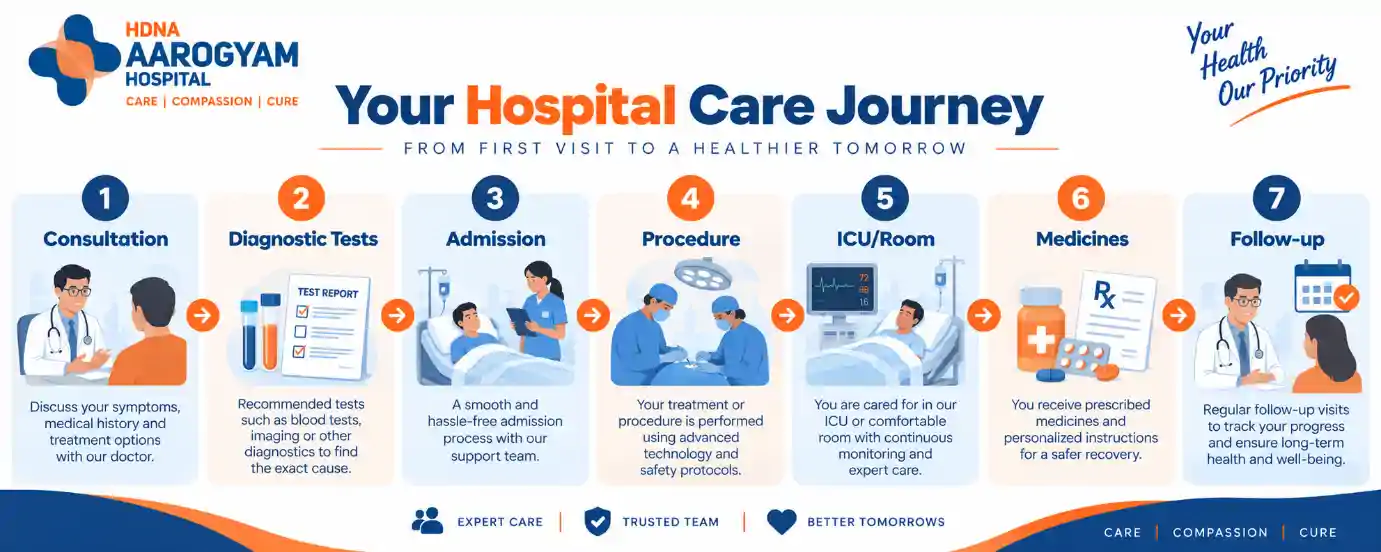
Step 1: Identify the patient’s medical need
Decide whether the patient needs a routine checkup, second opinion, ECG, echo, chronic heart disease follow-up or urgent evaluation.
Step 2: Shortlist hospitals near the patient
Consider travel time, emergency access and family support. A hospital that is difficult to reach may create unnecessary delays during a cardiac emergency.
Step 3: Check the cardiologist
Review qualifications, specialty, experience, current schedule and consultation process.
Step 4: Confirm facilities
Ask about ECG, echocardiography, cardiac ICU, emergency care, cath lab and interventional cardiology.
Step 5: Ask about costs
Request consultation fees, test costs, procedure estimates and insurance or PM-JAY requirements.
Step 6: Verify hospital details
Confirm the address, emergency entrance, phone number, appointment process and required documents.
Step 7: Prepare a medical file
Carry previous ECGs, echo reports, angiography reports, prescriptions, discharge summaries and a list of current medicines.
Quick recap
Start with the patient’s medical requirement.
Compare hospitals using clinical, emergency and financial criteria.
Confirm important details directly before visiting.
Trends to Watch in Cardiac Care in 2026
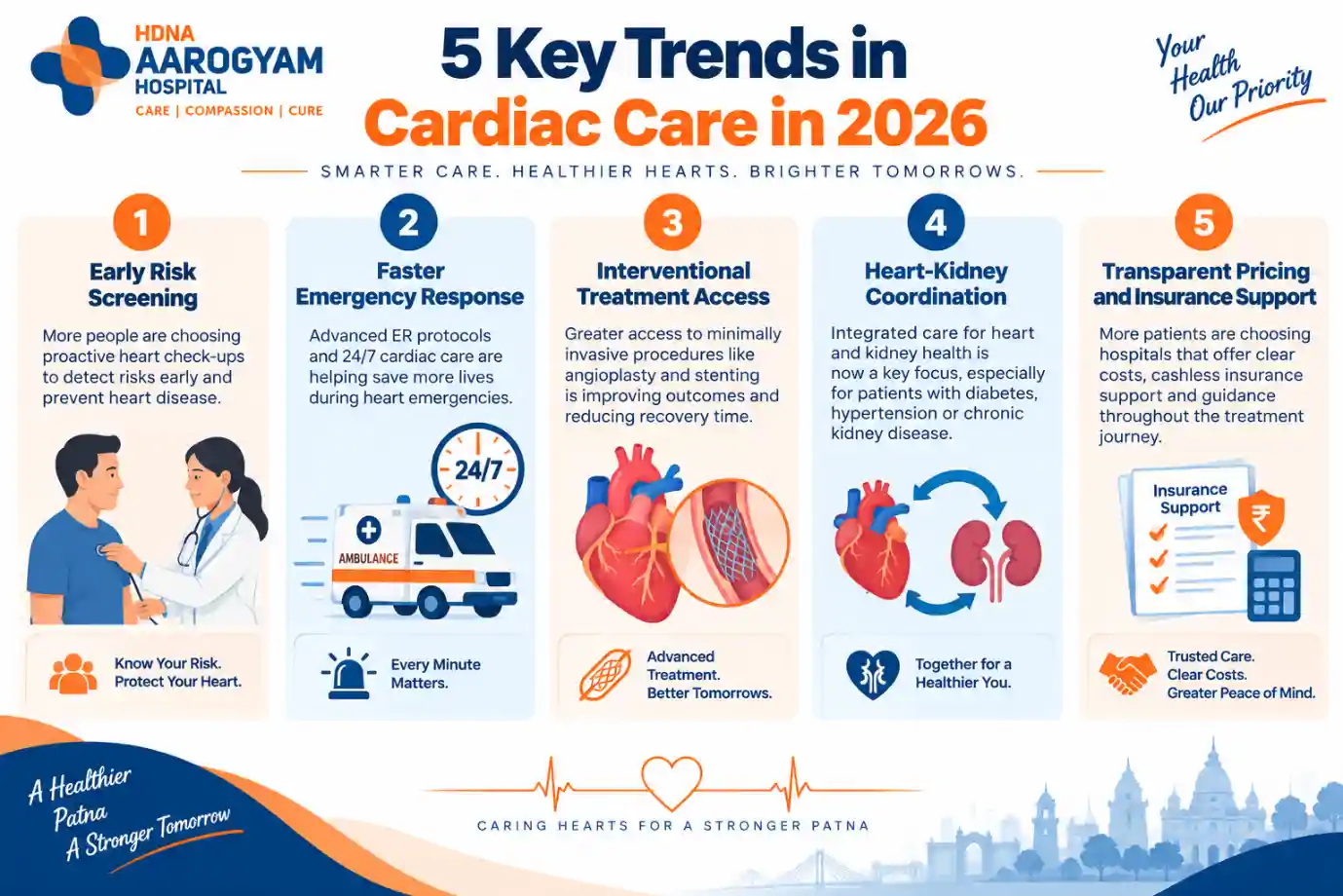
Earlier detection of cardiovascular risk
Raised blood pressure, blood glucose, cholesterol and excess weight can increase cardiovascular risk. WHO emphasizes that many risk factors can be identified and managed through primary and preventive healthcare.
More focus on coordinated heart and kidney care
Heart and kidney conditions frequently affect one another. Hospitals with cardiac and renal expertise may provide practical advantages for patients with diabetes, hypertension, kidney disease or complex cardiovascular risk.
Greater emphasis on emergency readiness
Hospitals are increasingly evaluated by patients for emergency availability, critical-care support, specialist access and the ability to provide treatment without unnecessary transfers.
More informed healthcare decisions
Patients now compare doctor profiles, hospital services, online reviews, insurance options and treatment information before booking. Online research should support—not replace—professional medical advice.
Frequently Asked Questions
What is the best heart hospital in Patna?
The best heart hospital in Patna is a hospital with qualified cardiologists, emergency cardiac care, appropriate diagnostic testing, critical-care support and treatment facilities suited to the patient’s condition. Patients should compare clinical capabilities, doctor experience, accessibility, costs and follow-up care.
How do I choose a cardiology hospital in Patna?
To choose a cardiology hospital in Patna, check cardiologist qualifications, ECG and echocardiography availability, cardiac ICU, emergency response, angiography and interventional cardiology services. Patients should also verify consultation fees, insurance support, location and current doctor schedules.
What tests are available at a heart hospital?
Common cardiac tests include ECG, echocardiography, blood tests, cardiac monitoring, stress testing and coronary angiography when clinically indicated. The treating cardiologist decides which tests are appropriate for the patient.
What are the signs of a cardiac emergency?
Signs of a cardiac emergency may include chest pressure, chest pain, shortness of breath, cold sweating, nausea, fainting or discomfort spreading to the arm, back, neck or jaw. Patients with possible heart attack symptoms should seek emergency medical care immediately rather than waiting for a routine appointment.
Is HDNA Aarogyam Hospital a heart hospital in Patna?
HDNA Aarogyam Hospital is a multispeciality tertiary care hospital in Patna with a stated Institute of Cardiac Sciences. The hospital’s stated cardiac services include interventional cardiology, cardiac critical care and related cardiac treatment support; patients should confirm current facilities and specialist availability directly.
Conclusion
Choosing a heart hospital in Patna requires more than comparing advertisements or online ratings. Patients should evaluate seven key areas: cardiologist qualifications, emergency readiness, diagnostic facilities, interventional cardiology, cost transparency, accessibility and hospital reputation.
For patients seeking cardiac care in the Bailey Road, Rupaspur or IAS Colony areas, HDNA Aarogyam Hospital is an option to explore because of its stated cardiac centre of excellence, interventional cardiology services, critical-care support and multispeciality facilities.
Contact HDNA Aarogyam Hospital, Patna to enquire about cardiologist consultation, cardiac testing, interventional cardiology services and appointment availability.


